Applications to M7 schools surged up to 38% in the 2023-2024 cycle, driving acceptance rates down to pre-pandemic lows. Stanford now admits just 6.8% of applicants, while even Kellogg's rate dropped to 28.6%. This intensifying competition means strategic preparation matters more than ever.
This guide breaks down exactly what elite programs evaluate, what a winning application looks like, and how to build one that stands out.
Key Takeaways
- Top MBA programs use holistic review: GMAT/GRE, GPA, essays, recommendations, and interviews are evaluated together as one coherent story
- Admissions committees assess three core questions: Can you handle the academic rigor? Will you add value to the class? Are you likely to succeed after graduation?
- Strong credentials get you noticed; a compelling, authentic narrative aligned with each school's specific culture is what gets you admitted
- Common mistakes like generic essays, ignoring school-specific fit, or over-focusing on test scores disqualify otherwise competitive candidates
- Starting early, targeting the right schools, and building a consistent narrative across all components improves your odds
What Top MBA Programs Are Really Evaluating
Elite programs do not rank applicants by GMAT score or GPA alone. They conduct a holistic review designed to identify candidates who will contribute to classroom discussions, strengthen the community, and enhance the alumni network.
"Holistic" means committees weigh every application component—test scores, transcripts, resume, essays, recommendations, and interviews—considering how these elements fit together to reveal your leadership potential, self-awareness, and authentic motivation.
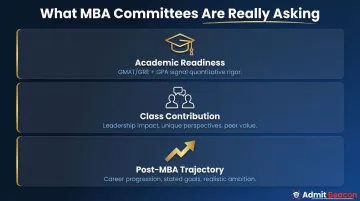
Every admissions committee tries to answer three core questions:
- Academic readiness: GMAT/GRE scores and undergraduate performance signal whether you can handle the quantitative rigor, especially in analytical coursework
- Class contribution: Leadership impact, unique perspectives, and what you'll bring to case discussions and group projects
- Post-MBA trajectory: Career progression, stated goals, and whether your ambitions are realistic given your background
Programs are assembling a class — and that means diversity of background, industry, function, geography, and perspective matters as much as individual strength. Being a strong candidate alone won't get you in; fit with the program's culture and class composition is equally important.
A qualified McKinsey consultant, for instance, may face steeper odds if the incoming class already has 30 consultants and the committee is actively seeking non-profit leaders or engineers. Your profile is evaluated in context, not in a vacuum.
The Core Components of a Top MBA Application
Every top program requires a standard set of application components. While these elements are similar across schools, how committees weight them—and what "strong" looks like—varies meaningfully by program.
Standardized Test Scores (GMAT or GRE)
The GMAT or GRE signals quantitative readiness and academic capability. All M7 programs now accept the GMAT Focus Edition (averaging 685-690 at HBS and Columbia) interchangeably with the Classic GMAT (averaging 730-740) and GRE, with no stated preference. At HBS, GRE submissions now make up 44% of the class, eliminating any historical stigma against the exam.
Current M7 Score Benchmarks:
| School | Classic GMAT | GMAT Focus | GRE (V/Q) |
|---|---|---|---|
| Stanford GSB | 738 avg | N/A | 164/164 avg |
| Harvard | 730 median | 685 median | 164/164 median |
| Wharton | 732 avg | N/A | 163/162 avg |
| Booth | 730 median | N/A | 163/164 avg |
| Kellogg | 740 median | N/A | 162/163 median |
| Columbia | 734 avg | 690 avg | 163/163 avg |
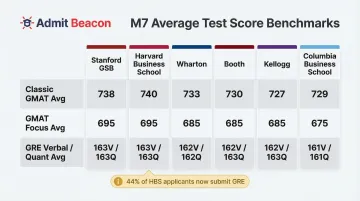
A strong score can offset weaknesses elsewhere, while a low score—though not automatically disqualifying—requires a strong counternarrative. Choose the exam format that yields your highest relative percentile rather than forcing a GMAT attempt. Allow adequate preparation time rather than rushing to submit a score.
Test waivers are extremely rare at M7 programs. Only highly specific internal pipelines qualify—Chicago Booth waives scores only for current UChicago undergrads with 3.4+ GPA, and MIT Sloan waives for MIT seniors with 4.2+ GPA. HBS, Stanford, Wharton, Kellogg, and Columbia do not offer waivers for general applicants.
Academic Transcript and GPA
A 3.7 undergraduate GPA sits exactly at the M7 median, slightly trailing Stanford (3.76), HBS (3.76), and Kellogg (3.76) but leading Booth (3.6) and Columbia (3.6). Committees evaluate GPA in context: they consider the rigor of coursework, the undergraduate institution, performance trends over time, and any competing demands.
Address a low GPA proactively through optional essays or additional coursework rather than hoping the committee overlooks it. If your GPA is below 3.6, offset the academic risk with a GMAT score above the school's average or highlight quantitative professional experience.
Professional Resume
A top MBA resume must convey career progression, increasing scope of responsibility, quantifiable impact, and leadership moments. Treat every line as a narrative decision — each entry should signal readiness for business school and post-MBA goals, not just document where you've been.
Committees look for evidence that you've driven outcomes, influenced others, and made decisions under uncertainty. Titles matter less than impact. A mid-level manager who led a cross-functional turnaround is more compelling than a senior analyst who executed tasks without ownership over outcomes.
MBA Essays
Your resume shows what you've done. Essays explain why it matters and where you're headed. Most programs center their prompts on three questions: Why do you need an MBA? Why now? Why this school?
The best essays are specific and authentic. A generic essay submitted to multiple schools is one of the most common reasons strong candidates are rejected. Committees read thousands of applications — they can tell when you're writing what you think they want to hear rather than speaking from genuine conviction.
Non-traditional backgrounds (entrepreneurs, engineers, non-profit leaders, family business professionals) often produce the most compelling stories precisely because they are distinctive. Admit Beacon works with applicants across these profiles, building narratives that reflect each school's specific culture while staying genuinely the applicant's own — drawing on a Knowledge Base covering the top 25 programs and live webinars with current students and alumni.
Letters of Recommendation
Strong recommendations come from supervisors who can provide specific, detailed examples of leadership impact and professional growth—not just general praise. Brief your recommenders on your application narrative so their letters reinforce rather than repeat or contradict your story.
Top programs increasingly evaluate emotional intelligence, with NYU Stern requiring a specific "EQ Endorsement" from a supervisor. Coach your recommenders to highlight empathy, receptiveness to feedback, and collaborative leadership, not just analytical wins.
Admissions Interview
Interview formats vary by school (behavioral, blind, team-based), but committees consistently assess communication clarity, maturity, self-awareness, and cultural fit. By the interview stage, most candidates have a meaningful chance of admission—preparation and authenticity are what separate the accepted from the waitlisted.
Never underestimate this stage. Many candidates assume the hardest work is done once they submit and approach interviews underprepared. Failing to articulate goals clearly, giving rehearsed-sounding answers, or not demonstrating genuine curiosity about the school can undo an otherwise strong written application.
How Admissions Committees Actually Read Your Application
Committees do not evaluate components in isolation—they read the application as a whole, looking for coherence and consistency. A high GMAT paired with an unfocused essay and a vague career goal signals a weak candidacy even on paper.
Fit, however, goes beyond stating a preference. You need to show you understand what makes a specific program distinct—and articulate precisely how you will contribute to it. That takes genuine school research, not a recycled paragraph swapping in a new school name.
Leadership potential is another key lens—and committees are not looking at titles or years of experience. Across your resume, essays, and recommendations, they want evidence of moments where you made decisions, drove outcomes, and moved others to act.
Self-awareness is an explicit admissions criterion at many top programs, including Tuck and Booth. In practice, this means demonstrating three things:
- Identifying your strengths and skill gaps honestly
- Explaining past decisions without deflection or over-polishing
- Articulating how an MBA fits into a larger professional transformation—not just "I want to advance my career"
School-specific positioning matters. A candidate applying to HBS, Stanford GSB, and Kellogg should not submit the same application to all three. Each program has a distinct culture and values—aligning your narrative to each school's ethos, while maintaining authenticity, is a critical skill in competitive admissions.
Building a Compelling MBA Application Story
The strongest applications have a single, coherent story that runs across the resume, essays, recommendations, and interview. This "application thread" answers: who you are, what you've achieved, what you want next, and why this program, right now, is the bridge between your past and your future.
Four building blocks of that story:
- Your career narrative — the logic of how you got here
- Your post-MBA goal — specific, credible, and connected to your background
- Your "why MBA" argument — what you need that only a top program can provide
- Your school-specific fit — what you will give to, and gain from, this particular program
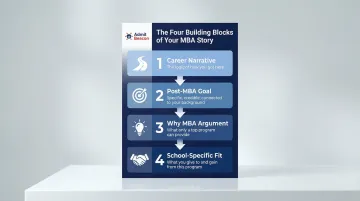
Authenticity is a strategic asset, not just a soft concept. Committees read thousands of applications and recognize when a candidate is writing what they think the school wants to hear versus speaking from genuine conviction. Non-traditional backgrounds often produce the most compelling stories precisely because they are distinctive.
That authenticity deepens when you truly understand the programs you're targeting. Thorough school research helps you identify where you genuinely fit—and signals that to the committee.
Strong research includes:
- Campus visits and attending info sessions
- Conversations with current students and alumni
- Understanding each program's culture and recruiting strengths
This groundwork does more than inform your essays. It helps you determine which schools are the right fit for your goals, reducing wasted applications and strengthening the ones you submit.
Key Factors That Affect Your Chances of Admission
Applicant pool composition matters. Candidates are not evaluated in a vacuum but relative to others applying in the same cycle, from the same industry, geography, or demographic. The overall M7 admit rate fell to 18.7% in the 2023-2024 cycle, with Stanford at 6.8% and HBS at 11.2%. Being in an over-represented applicant category (e.g., Indian male engineers in tech, investment bankers, management consultants) raises the bar for differentiation.
Consulting and finance make up over 50% of classes at Wharton, Booth, and Columbia, which means overrepresented applicants need to stand out on dimensions beyond professional pedigree. The most effective differentiators tend to be:
- Demonstrated emotional intelligence and self-awareness in essays and interviews
- Extracurricular impact with measurable outcomes (not just participation)
- Post-MBA goals that go beyond the obvious next-tier promotion
- A coherent narrative connecting past experience to future ambition
Application round timing affects outcomes. Round 1 is typically advantageous for most applicants (more seats, stronger signal of commitment). Round 2 is viable if more preparation is needed. Round 3 carries a significantly lower admission rate, with Wharton explicitly warning that "space in the class becomes more limited for Round 3 applicants, resulting in a more competitive round." Submitting a stronger application in a later round almost always beats submitting a weaker one earlier.
Profile gaps are the other variable that shapes how a committee reads your file. A low GPA, limited work experience, a career gap, or unconventional background is rarely disqualifying on its own — but it does require a proactive response. Ignoring a weakness and hoping the committee doesn't notice is the most common mistake applicants make. Naming it directly, providing honest context, and showing what you did about it is the move that actually works.
Common Mistakes That Derail Strong Applicants
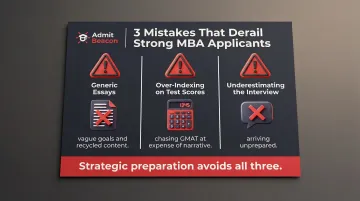
Even well-qualified candidates get rejected for avoidable reasons. These three patterns show up repeatedly in unsuccessful applications:
Writing generic essays. Vague goal statements ("I want to be a leader in business"), surface-level school research, or recycled essays across programs all signal low effort. Admissions committees notice — and reject competitive candidates for exactly this reason.
Over-indexing on test scores. Retaking the GMAT repeatedly while neglecting essay quality, narrative development, or recommender preparation is a common miscalculation. Beyond a competitive threshold score, chasing a higher number rarely moves the needle as much as strengthening the story.
Underestimating the interview. Many applicants assume the hard work ends at submission. Showing up underprepared, giving rehearsed-sounding answers, or failing to ask thoughtful questions can undo an otherwise strong written application.
Frequently Asked Questions
Is it hard to get into top MBA programs?
M7 acceptance rates range from 6.8% (Stanford) to 28.7% (Booth), making admission highly competitive. The challenge is not just credentials but differentiation in a qualified pool. Strategic preparation—strong narrative, school-specific positioning, and authentic self-awareness—meaningfully improves odds.
Is 25 too young to apply for an MBA?
Most top programs average 4-5 years of work experience at enrollment, with a middle 80% range of 3 to 7 years. Younger applicants with strong leadership exposure and clear goals can be competitive, especially through deferred enrollment programs like HBS 2+2 or Wharton Moelis Advance Access, which require zero years of full-time work.
Is a 3.7 GPA good for business school?
A 3.7 GPA is competitive at most top programs, sitting near the M7 median. GPA is evaluated in context—institution, major rigor, grade trends—and is one input among many. If your GPA falls below 3.5, a strong GMAT score or clear quantitative professional track record helps offset it.
How many years of work experience do I need for a top MBA program?
The typical range is 3-7 years, with 4-5 being most common at enrollment. Quality of experience and demonstrated progression matter more than raw years. Both early-career and more experienced applicants can be competitive with the right narrative.
Do I need a perfect GMAT score to get into a top MBA program?
No. Competitive programs regularly admit candidates well below the 99th percentile. A score at or above the school's average is useful, but essays, profile, and fit often carry equal or greater weight in the final decision. Once you clear the score threshold, your essays and positioning do the heavier lifting.
What are the top MBA specializations at elite programs?
Common concentrations include finance, consulting/strategy, technology/operations, entrepreneurship, and healthcare management. Choose programs based on fit with your post-MBA career goal rather than specialization prestige—concentration rarely drives admissions decisions on its own.