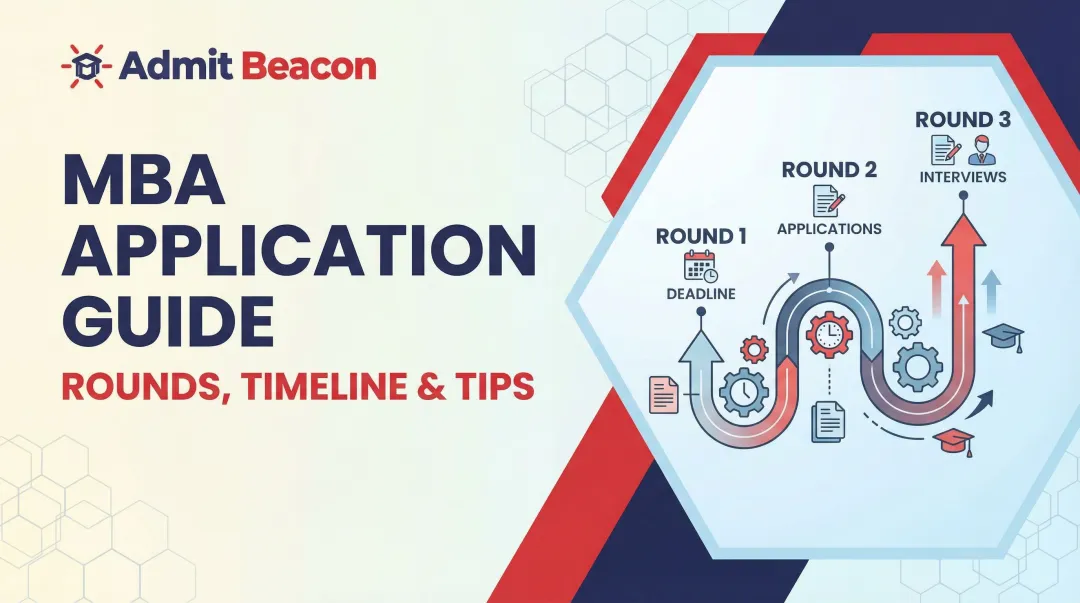
This guide provides a comprehensive school-by-school deadline table for top US and international MBA programs, breaks down how application rounds work, and offers strategic guidance on choosing the right round for your profile. Whether you're deciding between R1 and R2, evaluating Early Action options, or exploring deferred MBA programs, this resource will help you navigate the 2025-2026 cycle with confidence.
Key Takeaways
- R1 deadlines for most top US programs fall between early September and mid-October 2025
- R2 typically runs from early to mid-January 2026, with R3 in March–April
- HBS and Columbia offer only two rounds, reducing flexibility in round selection
- INSEAD and other international schools run four rounds per cycle across multiple intakes
- Deferred MBA deadlines for current undergraduates fall primarily in April 2026
- Applying in R1 maximizes both admission odds and scholarship availability, with the full class still open
2025-2026 MBA Application Deadlines: Top US Business Schools
The US MBA landscape operates primarily on a three-round system, though notable exceptions exist. Harvard Business School offers only two rounds, demanding early readiness from applicants. Conversely, NYU Stern provides four rounds for its full-time MBA. Several schools—including Duke Fuqua, Georgetown McDonough, and UVA Darden—offer Early Action deadlines in early September that yield decisions weeks before standard Round 1.
Official 2025-2026 US Full-Time MBA Deadlines
| School | Round 1 | Round 2 | Round 3 / 4 | Strategic Notes |
|---|---|---|---|---|
| Harvard (HBS) | Sep 3, 2025 | Jan 5, 2026 | N/A | Only two rounds offered |
| Stanford GSB | Sep 9, 2025 | Jan 7, 2026 | Apr 7, 2026 | Recommends R1/R2 for couples |
| Wharton | Sep 3, 2025 | Jan 6, 2026 | Apr 1, 2026 | Recommends R1/R2 for international students |
| Chicago Booth | Sep 16, 2025 | Jan 6, 2026 | Apr 2, 2026 | Decisions Dec 4, Mar 26, May 21 |
| Columbia | Sep 3, 2025 | Jan 6, 2026 | Mar 26, 2026 | Priority funding requires R1 or R2 |
| MIT Sloan | Sep 29, 2025 | Jan 13, 2026 | Apr 6, 2026 | Decisions Dec 11, Apr 2, May 15 |
| Kellogg | Sep 10, 2025 | Jan 7, 2026 | Apr 1, 2026 | Decisions Dec 10, Mar 25, May 13 |
| Yale SOM | Sep 10, 2025 | Jan 6, 2026 | Apr 14, 2026 | Decisions Dec 4, Mar 19, May 14 |
| Berkeley Haas | Sep 11, 2025 | Jan 8, 2026 | Mar 31, 2026 | Decisions Dec 11, Mar 26, May 7 |
| Michigan Ross | Sep 8, 2025 | Jan 5, 2026 | Mar 23, 2026 | Decisions Dec 5, Mar 13, May 1 |
| Dartmouth Tuck | Sep 25, 2025 | Jan 5, 2026 | Mar 25, 2026 | Guaranteed interviews for early submission |
| Cornell Johnson | Sep 17, 2025 | Jan 8, 2026 | Apr 7, 2026 | Consortium Early: Oct 15 |
| Duke Fuqua | Sep 30, 2025 | Jan 8, 2026 | R3: Feb 24 / R4: Apr 1 | Early Action (Binding): Sep 4 |
| UCLA Anderson | Oct 1, 2025 | Jan 6, 2026 | Apr 7, 2026 | Decisions Dec 12, Mar 27, May 15 |
| NYU Stern | Sep 15, 2025 | Oct 15, 2025 | R3: Jan 15 / R4: Apr 15 | Four rounds offered |
| UVA Darden | Oct 1, 2025 | Jan 7, 2026 | Mar 1 / Apr 1 / May 1 | Early Action: Sep 4 |
| Georgetown McDonough | Oct 1, 2025 | Jan 7, 2026 | Apr 1, 2026 | Early Action (Binding): Sep 8 |
| UNC Kenan-Flagler | Oct 7, 2025 | Jan 6, 2026 | R3: Mar 3 / R4: Apr 21 | R3 final for international |
| Emory Goizueta | Oct 1, 2025 | Jan 7, 2026 | Mar 18, 2026 | Recommends R1/R2 for scholarships |
| CMU Tepper | Sep 30, 2025 | Jan 8, 2026 | R3: Mar 3 / R4: May 5 | R3 final for international |
| USC Marshall | Oct 15, 2025 | Jan 15, 2026 | Apr 15, 2026 | Recommends R1/R2 for visa processing |
| UT McCombs | Oct 15, 2025 | Jan 15, 2026 | Apr 1, 2026 | R3 final for international |
| Vanderbilt Owen | Oct 1, 2025 | Jan 7, 2026 | R3: Feb 24 / R4: Apr 1 | R4 final for international |
| Rice Jones | Oct 17, 2025 | Jan 16, 2026 | R3: Apr 3 / R4: May 27 | R4 domestic only |
| UW Foster | Oct 1, 2025 | Jan 6, 2026 | Mar 24, 2026 | R2 final for international |
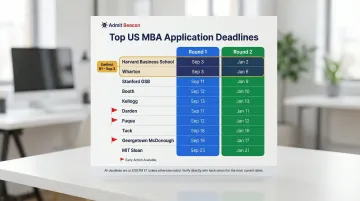
Critical Note: All deadlines are typically 11:59 PM in the school's local time zone. Always verify time zones and check for updates directly on official admissions pages before submitting.
Understanding Early Action and Early Decision
These two deadline types are often confused, but the commitment they require is very different:
| Type | Schools | Decision Speed | Binding? |
|---|---|---|---|
| Early Action | Darden, Georgetown McDonough, Duke Fuqua | 4-6 weeks | No — you can decline |
| Early Decision | Columbia R1 (functions this way) | Standard | Yes — deposit required on acceptance |
Early Action is the lower-risk option. You get an answer weeks before the standard round without giving up the freedom to choose another program. Early Decision signals deep commitment — use it only when you're ready to enroll immediately if admitted, because withdrawing after acceptance is considered a serious breach of trust with the school.
Deferred MBA Deadlines 2025-2026
Deferred enrollment programs allow high-achieving college seniors and eligible graduate students to secure a seat in a top MBA program before entering the workforce. Most deadlines cluster in April 2026, so plan to finalize test scores and recommendations during your final spring semester.
| Program | 2025-2026 Deadline | Eligibility |
|---|---|---|
| HBS 2+2 | April 22, 2026 | Final year bachelor's or master's students (no full-time work between degrees) |
| Wharton Moelis Advance Access | April 22, 2026 | Final year bachelor's or graduate students (direct from undergrad) |
| Stanford GSB Deferred | Standard R1/R2/R3 | Final year undergrad or grad students (no prior full-time work) |
| MIT Sloan Early Admission | April 17, 2026 | Final year undergrads or grad students (no prior full-time work) |
| Chicago Booth Scholars | April 2, 2026 | Final year bachelor's or joint bachelor's/master's programs |
| Columbia Deferred | April 15, 2026 | Senior year college or subsequent graduate program |
| Berkeley Haas Accelerated Access | April 16, 2026 | Undergraduate students in final year |
| UVA Darden Future Year Scholars | Apr 22 & Jul 15, 2026 | College seniors and full-time master's students |
These programs are designed for penultimate or final-year undergraduates with limited work experience. Applying now can reduce competitive pressure later — you lock in your MBA seat while spending 2-3 years building meaningful experience before matriculation.
One key eligibility restriction: if you took a gap year to work full-time between undergraduate and graduate degrees, you're generally ineligible for programs like Stanford GSB Deferred Enrollment and HBS 2+2.
2025-2026 MBA Application Deadlines: Top International Business Schools
International MBA programs frequently offer multiple intakes per year (January and August/September being most common) and use rolling admissions or extended five-round systems. This provides more flexibility than US programs but requires careful attention to intake-specific deadlines.
Critical Alert: January 2026 intake deadlines for top programs occurred in mid-2025 and are now closed. INSEAD is currently recruiting for January 2027, not January 2026.
| School & Intake | Rounds | 2025-2026 Deadlines | Decision Timing |
|---|---|---|---|
| INSEAD (Aug 2026) | 4 Rounds | R1: Sep 16, 2025 R2: Nov 4, 2025 R3: Jan 20, 2026 R4: Mar 10, 2026 |
Nov 21, Jan 16, Mar 20, May 8 |
| London Business School (Aug 2026) | 3 Rounds | R1: Sep 5, 2025 R2: Jan 5, 2026 R3: Mar 23, 2026 |
Nov 27, Apr 1, Jun 4 |
| Cambridge Judge | 5 Rounds | R1: Sep 26, 2025 R2: Nov 7, 2025 R3: Feb 13, 2026 R4: Apr 24, 2026 R5: May 29, 2026 |
Shortlist within 3 weeks; offers within 3 weeks of interview |
| Oxford Saïd | 5 Stages | S1: Sep 1, 2025 S2: Oct 1, 2025 S3: Nov 3, 2025 S4: Jan 7, 2026 S5: Mar 16, 2026 |
Oct 17, Nov 14, Dec 12, Mar 6, Apr 24 |
| HEC Paris | Rolling | Monthly deadlines (Jan 18, Feb 15, Mar 15, Apr 19, May 17, Jun 14, Aug 16) | 5 weeks after deadline |
| IESE (Sep 2026) | 4 Rounds | R1: Sep 25, 2025 R2: Jan 9, 2026 R3: Mar 12, 2026 R4: May 8, 2026 |
Nov 24, Mar 16, Apr 30, Jun 12 |
| HKUST | 5 Rounds | R1: Oct 14, 2025 R2: Jan 6, 2026 R3: Mar 3, 2026 R4: Apr 14, 2026 R5: May 12, 2026 |
Rolling interview invitations |
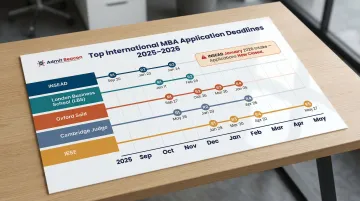
European and Asian programs offer extended application windows, often running into May. HEC Paris runs monthly deadlines with a 5-week turnaround — a practical choice for applicants who missed earlier US deadlines or need more time to prepare. Given how frequently international schools update rolling and multi-round schedules mid-cycle, always verify dates directly on each school's admissions page before submitting.
How MBA Application Rounds Work
Most US MBA programs run 2-3 formal rounds per admissions cycle, each with a fixed deadline and corresponding notification date roughly 8-12 weeks later. According to the Graduate Management Admission Council (GMAC), staggering rounds helps admissions committees "assemble a well-rounded cohort with a good blend of experience and expertise" and allows them to make strategic decisions regarding "scholarships and financial aid."
Round-Based vs. Rolling Admissions
While most top US programs use structured rounds, some programs use rolling admissions, where applications are reviewed and decided upon continuously as they are received.
Rolling admissions examples:
- HEC Paris operates on a rolling basis, guaranteeing a decision five weeks after submission
- University of Alberta evaluates applications continuously without specific rounds
- Boston College reviews applications on a rolling basis, meaning complete applications may receive decisions before official notification dates
With rolling admissions, every week you wait shrinks the pool of available seats and scholarship dollars. Submit as early as your application is competitive.
International Applicant Restrictions
Several schools explicitly close their doors to international candidates before the final round to accommodate visa processing timelines:
- UNC Kenan-Flagler: "Round 3 is the final deadline for international applicants"
- Rice Jones: "The Round 4 deadline is for domestic candidates only (U.S. Citizens or Permanent Residents)"
- CMU Tepper, UT McCombs, Vanderbilt Owen, UW Foster: All designate earlier rounds as the final deadline for international applicants
If you're an international applicant, confirm your target schools' international cutoffs before building your timeline — R3 or R4 may simply not be available to you.
Round 1 vs. Round 2 vs. Round 3: Which Should You Apply In?
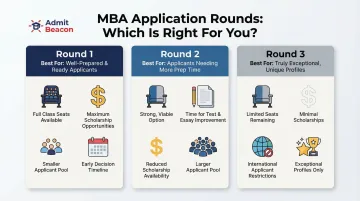
The standard guidance is straightforward: apply in the earliest round where you can submit your strongest application. That said, Round 1 carries real structural advantages — and understanding exactly what those are helps you make a more informed decision across all three rounds.
The Case for Round 1
Applying in Round 1 offers "increased odds of admissions" because "all seats in the class are up for grabs, and none of the scholarship budget has yet been awarded," according to GMAC.
Structural advantages:
- Full class capacity available—no seats have been filled yet
- Maximum scholarship funds available—none have been awarded
- Smaller applicant pool compared to R2 at most schools
- Admissions committees building the class with an open slate
Scholarship priority: Columbia Business School explicitly states that applicants must apply by Round 1 or Round 2 for "priority consideration for institutional funding." IESE notes that "scholarships are granted on a rolling basis—therefore, you will increase your chances of receiving a scholarship the sooner you apply!"
When Round 2 Is the Right Choice
Round 2 is the right choice when you need more time to strengthen your GMAT/GRE score, secure stronger recommenders, or finalize career goals. R2 is a strong, well-populated round at all top programs — not a backup option.
Apply in R2 if you:
- Need more time to improve standardized test scores
- Are taking the GMAT/GRE in the fall and won't have scores ready by September
- Need additional time to develop compelling essays and career narratives
- Are building stronger relationships with recommenders
- Want to strengthen your professional accomplishments before applying
A polished R2 application consistently outperforms a rushed R1 application. If your essays need another month of development, take it.
Round 3: The Exception, Not the Rule
Round 3 is the hardest round to succeed in — most seats are already filled, and schools are largely completing, not building, their classes. At elite programs, R3 admission typically goes to candidates with highly differentiated profiles who fill a specific gap.
2025-2026 is an exception worth noting. Poets&Quants reports that schools are managing "yield uncertainty" and "class composition goals" amidst a sharp drop in application volume, particularly from international candidates. This has opened Round 3 from a round of minor adjustments into a more genuine opportunity for the right candidates.
When R3 might work:
- You have an exceptional, highly differentiated profile
- You're filling a specific gap in the class (unusual industry, geography, or background)
- You experienced a sudden career change or urgent circumstance
- You're treating it as a supplemental safety net alongside other R1/R2 applications
When R3 doesn't work:
- You're an international applicant (many schools close international consideration after R2)
- You need significant scholarship funding (most funds are depleted by R3)
- Your profile is strong but not exceptional or highly differentiated
Guidance for International Applicants
International applicants face compressed timelines due to visa processing. Wharton officially recommends that international students apply in Round 1 or Round 2. GMAC echoes this, noting that for international students who need to handle visa applications and housing, "it makes sense to apply to your target MBA programs as early as possible."
Strategic imperatives for international candidates:
- Strongly prioritize R1 if your application is ready
- R2 is your last viable round at most programs
- Verify international applicant cutoffs at each target school
- Factor in 8-12 weeks for visa processing after admission
Building Your MBA Application Timeline
A successful MBA application requires reverse-engineering your timeline from your target deadline. Rushing an application to hit Round 1 is a common pitfall; a well-prepared Round 2 application will almost always outperform a rushed Round 1 submission.
Recommended Lead Times
For Round 1 (September 2025 deadlines):
- Start preparation: April-May 2025 at the latest
- Test prep: Begin GMAT/GRE preparation by March 2025 (top scorers report studying 90+ hours)
- Essay drafting: Start by June 2025 (plan for 8-10 weeks of writing and multiple revisions)
- Recommender outreach: Contact recommenders by May-June 2025 with sufficient lead time
- School research: Complete by June 2025 to inform essay strategy
For Round 2 (January 2026 deadlines):
- Start preparation: July-August 2025 at the latest
- Test prep: Complete GMAT/GRE by October-November 2025
- Essay drafting: Start by September 2025
- Recommender outreach: Contact recommenders by August-September 2025
- School research: Complete by August 2025
Month-by-Month Milestone Guide
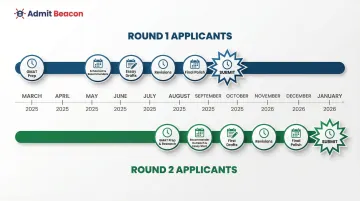
R1 Applicants (September 2025 Deadlines):
- March-April 2025: GMAT/GRE preparation, initial school research
- May 2025: Finalize school list, contact recommenders, begin resume development
- June 2025: Complete first essay drafts, deepen school research
- July 2025: Essay revisions, finalize recommender materials
- August 2025: Final essay polishing, application review, submission prep
- Early September 2025: Submit applications
R2 Applicants (January 2026 Deadlines):
- July-August 2025: GMAT/GRE preparation, school research, resume development
- September 2025: Contact recommenders, begin essay drafts
- October 2025: Complete first essay drafts, continue test prep if needed
- November 2025: Essay revisions, finalize recommender materials
- December 2025: Final essay polishing, application review, submission prep
- Early January 2026: Submit applications
Most Common Timeline Mistakes
Even well-organized applicants fall into predictable traps. These four come up most often:
Underestimating essay revision cycles: Plan for 6-8 weeks minimum — rushed essays produce generic narratives that admissions committees recognize immediately.
Waiting too long to contact recommenders: Recommenders need 4-6 weeks to write a specific, differentiated letter. A last-minute request almost always produces a generic one.
Applying to too many schools: Ten-plus applications spreads effort too thin. A focused list of 4-6 schools — mixing reach, competitive, and safe — produces stronger results than a wide net.
Choosing R1 speed over R2 quality: If your test scores aren't competitive, your career narrative isn't clear, or your essays aren't compelling, R2 is the smarter choice. Every time.
How Admit Beacon Supports Your Timeline
Admit Beacon works with applicants to determine which round fits their actual readiness — not just their preferred timeline. Lead consultant Niketa works directly with each client on school selection, career narrative, essay storyboarding, and mock interviews, dedicating roughly 40% of total application effort to offline reviews and detailed feedback.
Because Admit Beacon limits client intake, spots for the 2025-2026 cycle fill early. Reaching out now gives you the runway to build the kind of application that holds up under scrutiny at Harvard, Stanford, Wharton, and other top programs.
Frequently Asked Questions
What are the MBA application deadlines?
MBA application deadlines vary by school and round. For most top US programs, Round 1 falls in September–October 2025, Round 2 in January 2026, and Round 3 in March–April 2026. Refer to the tables in this article for school-specific dates and strategic notes.
What is the best time to apply for an MBA?
Round 1 is generally the best time to apply for most competitive candidates due to full class capacity and maximum scholarship availability. See the next question for a full R1 vs. R2 breakdown.
Should I apply Round 1 or Round 2 MBA?
Apply Round 1 if your application is fully ready and compelling. Choose Round 2 if you need more time to improve test scores, develop your career narrative, or strengthen recommender relationships.
Is Round 3 too late to apply for an MBA?
Round 3 is generally not recommended for most applicants, especially international candidates, as class sizes are nearly full and scholarship funds are limited. It may be viable in exceptional circumstances or for applicants with highly differentiated profiles filling specific class gaps.
What is an Early Action or Early Decision MBA deadline?
Early Action deadlines (Darden, Georgetown McDonough, Duke Fuqua) fall in early September and offer accelerated decisions without binding commitment. Early Decision (Columbia R1) requires a non-refundable deposit upon acceptance, binding you to attend if admitted.
When should I start preparing my MBA application?
Applicants targeting Round 1 should begin 5-6 months in advance (April–May for September deadlines). Round 2 applicants should start by July–August. Key early tasks include GMAT/GRE preparation, school list building, and recommender outreach.