Introduction
Receiving a Harvard interview invitation triggers a flood of questions: What does this actually mean? How much does it matter? What should I expect? What makes it stranger is that your interviewer won't have seen your application — they're a volunteer alum working entirely from conversation.
This guide covers what the Harvard interview actually is, how the process works, the questions you're likely to face, and how to prepare. Understanding how it functions in the decision — confirmatory, not decisive — changes how you approach it.
TLDR:
- Harvard alumni interviews are file-blind conversations conducted by volunteers, not admissions officers
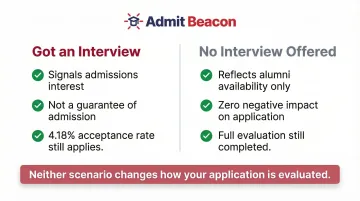
- No interview? That reflects alumni availability in your region — not a strike against you
- The interview is confirmatory, not decisive — it reinforces your application but won't make or break it
- Prepare 2-3 flexible stories covering academics, activities, and growth — skip the scripted answers
- Come ready with thoughtful questions about the interviewer's own Harvard experience
What Is the Harvard Interview?
Harvard interviews are conducted exclusively by alumni volunteers, not by admissions officers. This distinction directly shapes the tone and purpose of the conversation. Your interviewer is a Harvard graduate who has volunteered their time to meet with applicants in their local area — they're not professional evaluators with quotas to fill or checklists to complete.
The interview is designed as an informal, conversational exchange that gives the admissions committee a fuller picture of who you are beyond your application materials.
One detail worth knowing upfront: the interviewer does not have access to your application beforehand. They only receive your name, contact information, and the name of your high school. That gives you complete freedom to guide the conversation toward your strongest stories, without worrying about repeating what you wrote in your essays.
The Interview's Weight in Admissions
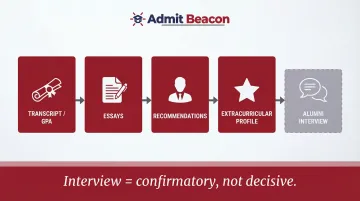
The alumni interview is one component among many in Harvard's holistic admissions process — alongside your transcript, essays, recommendations, and extracurricular profile. Harvard explicitly states that the interview will "never make or break your application; more likely than not, it'll just confirm that you're the awesome person that you showed you were in your application."
While the written report your interviewer submits to the admissions committee can add meaningful context about your character and intellectual curiosity, it's unlikely to override a strong or weak application on its own. Use the conversation to reinforce the narrative you've already built — it's confirmation, not a verdict.
Does Everyone Get a Harvard Interview, and What Does It Mean?
Not every applicant receives an interview invitation, and this has nothing to do with the strength of your application. Interview availability depends entirely on the capacity of alumni volunteers in your geographic area. Harvard has nearly 10,000 alumni volunteers globally, but the university acknowledges that "most areas do not have the capacity to interview all applicants."
Harvard's official guidance is clear: if you're not offered an interview, "not to worry! That's not a reflection on your application... And that will not hurt your application!" Your application will still receive a full and thorough evaluation.
What Receiving an Invitation Actually Signals
If you do receive an interview invitation, it reflects that the admissions office found your application interesting enough to warrant further conversation. That said, it is not a guarantee of admission. With an acceptance rate of approximately 4.18% for the Class of 2029, most applicants who interview will not be admitted.
Keep these realities in mind as you prepare:
- An invitation signals genuine interest from the admissions office — not a likely acceptance
- A missing invitation does not disadvantage your application in any way
- Even a strong interview cannot compensate for a weak overall application, and vice versa
Treat the conversation as a chance to show who you are beyond the application. Go in prepared, not presumptuous.
How the Harvard Interview Works
Logistics and Format
Interviews are arranged directly between the alumni volunteer and the applicant, typically via email or phone. Harvard does not conduct on-campus interviews in Cambridge. Instead, interviews can be:
- In-person at a public location like a coffee shop or library
- Virtual via video call (Zoom, Google Meet, etc.)
- By phone if other formats aren't feasible
Most interviews last approximately one hour, though the conversational format means sessions can run shorter or longer depending on the flow of discussion. If you're meeting virtually, ensure you have a quiet, distraction-free space with a stable internet connection. Dress in business casual attire — formal business wear isn't required, but you should look put-together and professional.
What Happens After the Interview
After the conversation, the alumni interviewer submits a written report to the admissions committee. This report summarizes the discussion, their impressions of your character and intellectual curiosity, and how you came across in person. What the interviewer writes about you matters far more than simply completing the interview.
Recent policy changes have altered what interviewers can include in their reports. Following the Supreme Court's 2023 ruling on affirmative action, Harvard has strictly prohibited alumni from mentioning an applicant's race, ethnicity, national origin, specific languages spoken at home, or specific religions practiced. Interviewers must use generalized terms like "affinity groups" or "faith events" when describing identity-based activities.
Topics the Interviewer Will Explore
Because the interview is file-blind, the conversation tends to be open-ended and exploratory rather than interrogative. Common themes include:
- Academic interests and what genuinely excites you intellectually
- Extracurricular involvement and what those activities mean to you personally
- Your high school experience and how you've made an impact in your community
- How you envision college and what you hope to gain from the experience
- Personal values, character, and how you've handled challenges
You're in control of the narrative here. Since the interviewer hasn't read your application, you can choose which stories to emphasize and which aspects of your background to highlight — use that freedom deliberately.
Virtual vs. In-Person Considerations
Both formats require attention to body language and eye contact, but virtual interviews demand extra preparation:
- Test your technology 24 hours in advance
- Position your camera at eye level
- Ensure good lighting (natural light from a window works well)
- Minimize on-screen distractions and close unnecessary tabs
- Look at the camera when speaking, not just at the screen
- Have a glass of water nearby and keep a pen and paper for notes
For in-person interviews, arrive 5-10 minutes early, bring a notepad, and be prepared to make small talk before diving into the formal conversation.
Common Harvard Interview Questions
Academic and Intellectual Curiosity Questions
Examples:
- "What are you interested in studying?"
- "What's a topic you've gone deep on outside of class?"
- "What's your favorite class and why?"
What Harvard Is Looking For: Harvard wants to see genuine intellectual engagement, not a polished answer about a pre-decided major. The best responses demonstrate curiosity, depth of exploration, and authentic passion.
How to Prepare: Frame a specific, personal academic interest rather than giving a generic answer. Avoid "I want to study biology" and go deeper instead:
"I've been fascinated by epigenetics ever since I read about how environmental factors can alter gene expression without changing DNA sequences. I started a research project looking at stress markers in plant cells, which led me down a rabbit hole of papers on transgenerational inheritance."
That level of specificity signals real curiosity — exactly what the interviewer wants to hear.
Extracurricular and Personal Identity Questions
Examples:
- "What do you do outside the classroom?"
- "What activity is most meaningful to you?"
- "How have you made a difference in your high school or community?"
What They're Really Asking: The goal isn't to recite your résumé but to reveal what drives you and what you value. Harvard wants to understand your motivations, not just your accomplishments.
How to Prepare: Pick one or two experiences and go deep rather than listing everything. Explain why the activity matters to you personally, what you've learned, and how it's shaped your perspective. Focus on impact and growth, not just titles and hours.
Reflective and Character Questions
Examples:
- "Tell me about a challenge you've faced and how you handled it."
- "Who do you admire and why?"
- "Describe a time when you failed and what you learned."
What They're Really Asking: These questions probe resilience, self-awareness, and values. Harvard wants to see that you can reflect honestly on difficult experiences and grow from them.
How to Prepare: Prepare a genuine answer tied to real growth rather than a rehearsed story that sounds manufactured. Avoid choosing a "challenge" that's actually a humble-brag. The best answers show vulnerability, introspection, and concrete evidence of how you've changed.
Books and Big Ideas Questions
Examples:
- "What's the best book you've read recently?"
- "What are you curious about right now?"
- "If you could have dinner with anyone, living or dead, who would it be?"
What They're Really Asking: The interviewer is trying to understand how you think, not just what you've read. These questions reveal how actively you engage with ideas beyond what's required for school.
How to Prepare: Choose a title and prepare a brief reflection plus personal takeaway — not a book report. Explain why it resonated, what questions it raised, or how it shifted your thinking. The same principle applies to any curiosity question: be specific, and make your genuine engagement visible.
The "Why Harvard?" Dimension
While interviewers may not ask this directly, the conversation often surfaces it naturally. Demonstrating specific, genuine knowledge of Harvard leaves a strong impression.
What to Research:
- Specific academic programs or research centers
- The house system and residential college culture
- Cross-registration opportunities or study abroad programs
- Faculty whose work aligns with your interests
Skip generic statements like "Harvard has amazing resources." Reference specifics instead: "I'm really interested in Professor X's work on Y, and I'd love to explore that through Harvard's undergraduate research opportunities."
Questions You Should Ask Your Harvard Interviewer
Coming prepared with thoughtful questions signals intellectual curiosity and genuine interest in Harvard. It also keeps the conversation genuinely two-directional, not just a one-sided evaluation.
Strong Question Categories
About Their Harvard Experience:
- "What was the most surprising thing about Harvard when you first arrived?"
- "How did you choose your concentration, and would you make the same choice today?"
- "What's one experience at Harvard that significantly shaped your perspective?"
About Harvard's Intellectual Environment:
- "What do you think makes Harvard's academic culture distinctive?"
- "How did students balance depth in their major with exploring other interests?"
- "What kind of intellectual community did you find outside the classroom?"
Advice for Incoming Students:
- "If you could go back and give your first-year self one piece of advice, what would it be?"
- "What's something you wish you'd known before arriving at Harvard?"
- "How did you make the most of your four years there?"
What Makes a Question Work
The best questions feel natural and conversational, not like items on a scripted list. Listen actively during the interview. The strongest questions often emerge from what the interviewer shares — if they mention their concentration or a specific experience, follow that thread rather than jumping to your prepared list.
Avoid questions Harvard's website answers for you. Questions like "What majors does Harvard offer?" or "Does Harvard have study abroad programs?" signal surface-level preparation. Research the basics before the interview so your questions reflect actual depth — not just curiosity, but the kind that shows you've already done the reading.
How to Prepare for Your Harvard Interview
Practice Out Loud
The single most important preparation step is practicing out loud. Do at least two or three mock interviews with someone who can give honest feedback — a parent, teacher, counselor, or admissions consultant. The goal is for your answers to feel natural rather than memorized.
If you want structured support, Admit Beacon's mock interview preparation helps applicants sharpen delivery and build narratives that resonate with top schools like Harvard — without sounding rehearsed.
Research Your Interviewer
If your interviewer shares their name beforehand, look them up on LinkedIn. Knowing their profession, graduation year, or field helps you ask more relevant questions and creates a warmer connection. You're not looking for deep personal details — just enough context to make the conversation more natural.
Mindset and Tone
Remember: the interview is designed to feel like a conversation, not a performance review. Listen actively, ask follow-up questions naturally, and let your genuine personality come through rather than defaulting to what you think Harvard "wants to hear."
The interviewer volunteered their time because they want to meet interesting students and help the admissions process. They're not trying to trip you up or catch you in a mistake. Approach the conversation with curiosity and authenticity, and the tone will take care of itself.
Logistics and Presentation
Small details signal preparation and professionalism:
- Arrive on time for in-person interviews (5-10 minutes early is ideal)
- Log in 2-3 minutes early for virtual interviews to test your setup
- Dress in smart-casual attire — think business casual, not formal suit
- Choose a quiet, professional environment for video calls
- Silence your phone and eliminate potential distractions
What to Avoid
Common mistakes to sidestep:
- Reciting rehearsed answers that could apply to any applicant — if it's generic, cut it
- Asking zero questions, which signals low interest or poor preparation
- Criticizing other schools you're considering; focus on fit, not comparison
- Being vague about achievements — the interviewer hasn't seen your application, so be specific
- Monologuing past five minutes or giving one-sentence responses; aim for 1-2 minutes per answer
Frequently Asked Questions
Who does Harvard give interviews to?
Harvard attempts to offer interviews to all applicants through its alumni network, but availability depends on alumni volunteers in the applicant's region. Not every applicant will receive an interview due to capacity constraints, and not being contacted is not a negative signal.
What does it mean if you get a Harvard interview?
Receiving an interview invitation is a positive sign that the admissions office found your application interesting, but it does not indicate a high likelihood of admission. Many applicants who interview are not admitted, and some admitted students may not have had an interview.
How long is a Harvard interview?
Harvard alumni interviews typically last around one hour, though the conversational format means they can run shorter or longer depending on the flow of discussion.
Does the Harvard interview matter for admissions?
The alumni report submitted after the interview is reviewed by the admissions committee and can add meaningful context about your character and intellectual curiosity. That said, the interview alone won't override a strong or weak application. It is one holistic factor among many.
Can you go to Harvard for free if your family makes under $200,000?
Harvard's financial aid program is among the most generous in higher education. Families earning below $100,000 typically pay nothing, and families earning between $100,000 and $200,000 receive free tuition plus additional aid based on individual circumstances. Use Harvard's Net Price Calculator for accurate estimates.
Can I get into Harvard with a 1400 SAT?
Harvard's middle 50% SAT range is 740–780 for Evidence-Based Reading and Writing and 770–800 for Math, so a 1400 falls below the typical admitted profile. Harvard does evaluate applicants holistically, and extraordinary strengths elsewhere can result in admission, though it is rare at that score.